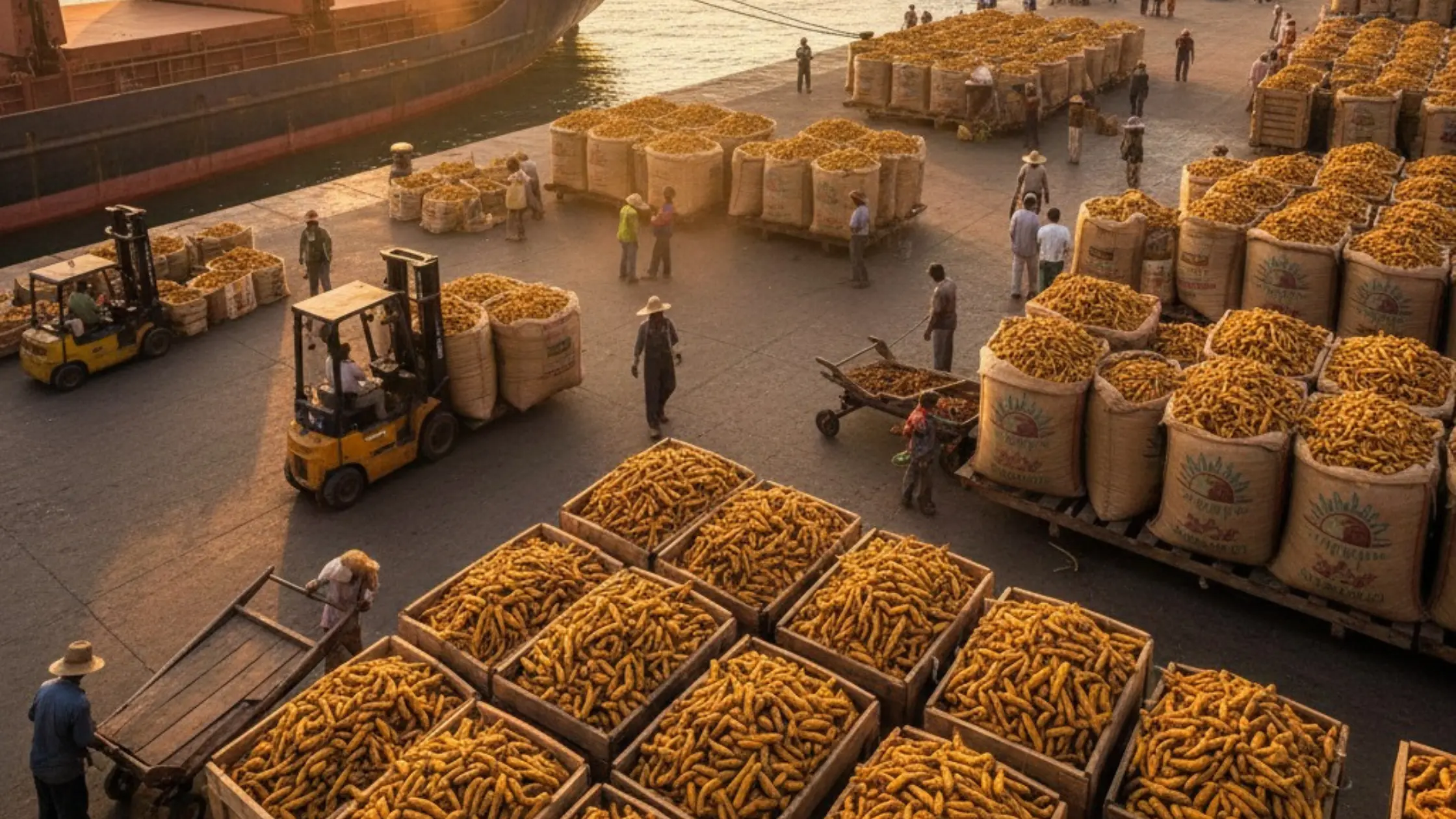
Turmeric is one of India’s oldest agricultural treasures—a spice that holds cultural, medicinal, and economic value. Over the years, Indian turmeric has gained exceptional global attention, not just for its vibrant colour but for its therapeutic qualities, purity, and consistent supply. As global consumers increasingly turn toward natural health ingredients, turmeric has found new markets across Europe, the U.S., Southeast Asia, the Middle East, and beyond. BigBang Exports has been continually supporting this shift by connecting global buyers with India’s finest turmeric varieties, ensuring quality, authenticity, and efficient supply chains. With BigBang Exports, the world experiences turmeric that carries India’s agricultural strength, tradition, and natural richness.
Across international markets, turmeric is no longer seen as just a spice—it is a superfood. Its high curcumin content, anti-inflammatory properties, and versatile culinary use have made it an essential product in:
This rising awareness has transformed turmeric into one of India’s fastest-growing agricultural exports.
India is the world’s largest producer, consumer, and exporter of turmeric, and the rising global demand has strengthened India’s leadership. The surge in turmeric export from India comes from multiple factors—including strong agricultural heritage, improved processing standards, and buyer trust in Indian produce.
Key reasons India leads turmeric exports:
The combination of quantity, quality, and authenticity keeps India ahead of competitors.
Today’s buyers look for purity, traceability, and consistency—qualities deeply associated with Indian spices. Sustainable farming, advanced processing, and better shipping infrastructures have accelerated the growth of spices export from India, especially turmeric.
Supporting factors include:
Because of these developments, Indian spices—including turmeric—have achieved a premium reputation globally.
India’s success in turmeric exports is not accidental; it is built on several strong competitive advantages.
Favorable Climate for Cultivation
India’s tropical climate supports
high-yield, high-quality turmeric cultivation.
Diverse Varieties
Each region produces unique turmeric variants differing
in aroma, colour, and curcumin percentage.
Advanced Processing Infrastructure
Modern cleaning, drying, curing, and
polishing techniques help exporters deliver world-standard quality.
Strong Farmer Networks
Millions of farmers contribute to a stable supply
chain, reducing shortages.
Cost Competitiveness
Affordable production costs allow exporters to offer
competitive prices globally.
These factors give Indian turmeric an unmatched advantage in the international market.
Turmeric is benefiting from global lifestyle changes.
Key international trends include:
These shifts have created sustained demand for high-quality Indian turmeric.
Pharmaceuticals and Nutraceuticals
Turmeric extracts, especially curcumin,
are widely used for anti-inflammatory and antioxidant benefits.
Food and Beverage
Turmeric is used in:
Cosmetic and Skincare
Turmeric is now popular in:
Ayurvedic and Herbal Supplements
Traditional medicine systems across the
globe are using turmeric extracts in immunity formulations.
Exporters bridge the gap between farmers and international buyers.
Export companies assist
by:
Reliable exporters make Indian turmeric trusted worldwide.
Certifications help buyers trust the quality and purity of turmeric.
Common certifications
include:
Exporters who meet global certification requirements gain faster access to premium markets.
India is increasingly adopting advanced technologies for improved production:
These innovations help maintain global competitiveness.
Turmeric exports contribute significantly to rural employment, farmer income, and foreign exchange earnings. Growing global demand:
Turmeric is not just a spice—it is an economic driver.
With rising demand, new exporters can enter the market successfully by learning top tips for exporting Indian spices that help avoid common mistakes and build reliable partnerships. These include:
New exporters who follow these practices can scale rapidly in global spice markets.
Global consumers prefer spices grown using eco-friendly methods.
Sustainable farming
practices include:
These methods increase demand in organic markets, offering higher profits.
Organic turmeric receives higher price premiums. Exporters are helping farmers transition to organic farming by:
The global organic industry is one of the fastest-growing segments for turmeric.
Turmeric has moved beyond the kitchen and into global health, skincare, and wellness markets, strengthening India’s agricultural export landscape. As demand rises, BigBang Exports is helping international buyers access premium-quality Indian turmeric with complete transparency and consistent supply. Through strong farmer partnerships, reliable processing standards, and global outreach, BigBang Exports ensures that India maintains its leadership in the global turmeric market. With sustainability, innovation, and authenticity at its core, BigBang Exports continues shaping a brighter, stronger future for India’s turmeric exporters worldwide.