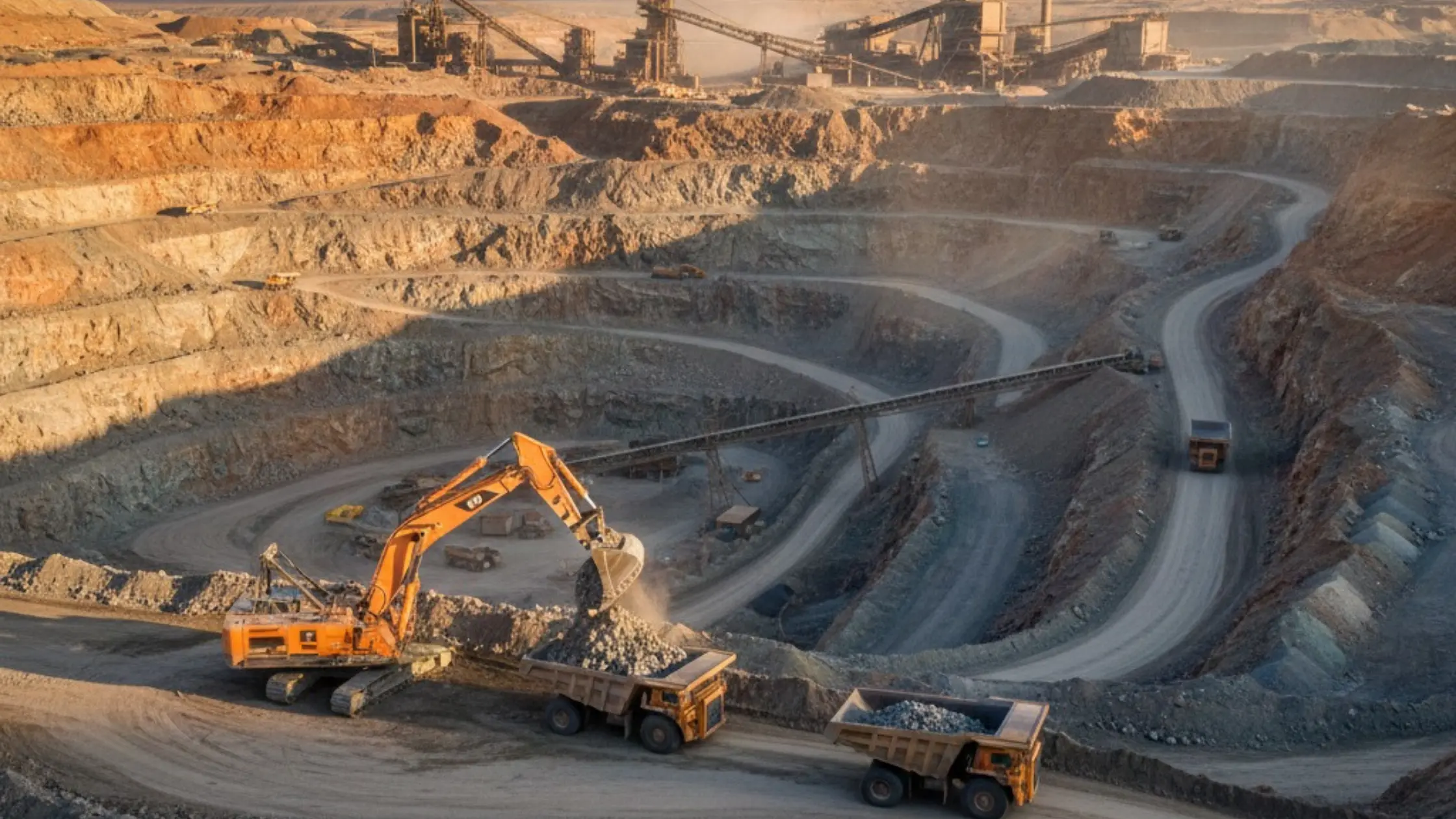
Minerals form the foundation of global development. From infrastructure projects to renewable energy systems, electrical components, manufacturing units, and technological innovations, minerals play a crucial role in nearly every sector. India, with its rich geological diversity, has long been a reliable supplier of high-quality minerals that support industries around the world. BigBang Exports has been actively contributing to this global supply chain, ensuring that businesses across multiple countries receive the mineral resources they need for production, innovation, and growth. With BigBang Exports, buyers gain access to a dependable mineral export partner capable of matching global standards and industry demands.
India’s mineral wealth includes metallic, non-metallic, fuel, and industrial minerals that support construction, manufacturing, energy production, and emerging technologies. Global industries depend on Indian mineral supply because India offers:
Countries building large-scale infrastructure projects or expanding their renewable energy capabilities rely heavily on quality mineral imports from India.
The increasing global focus on construction, urban development, clean energy, and technology has pushed the demand for minerals exported from India to new heights. Minerals such as iron ore, bauxite, mica, manganese, silica, limestone, granite, and gypsum have become essential for:
India’s advantage lies not just in mineral abundance but in the efficiency and reliability of its export ecosystem.
One of the reasons behind the rising scale of Indian mineral exports is the country’s ability to serve diverse global markets with both raw and processed minerals. India’s mining ecosystem, supported by modern technology and trained professionals, ensures consistent supply for industries worldwide. Key factors behind this growth include:
Indian minerals are trusted globally for their stability, uniformity, and strong compliance with international standards.
India’s minerals are essential for building modern infrastructure. Construction companies across the world rely on Indian materials because they offer:
Indian minerals contribute to:
Quality minerals allow construction companies to reduce costs without compromising durability.
Minerals play an integral part in traditional and renewable energy industries. Solar, wind,
thermal, hydro, and nuclear energy sectors rely heavily on mineral-based components.
India exports several minerals used in:
As countries expand renewable energy infrastructure, India’s mineral exports become even more valuable.
Consistency in Quality
India provides minerals with steady composition and
purity levels.
Strong Mining Infrastructure
Advanced mining machinery and skilled labour
ensure reliability.
Large Production Volumes
India’s vast reserves enable exporters to
meet long-term supply contracts.
Competitive Pricing
Favourable mining conditions and processing
efficiencies help reduce costs.
Timely Shipments
Strong export logistics make India one of the most
dependable suppliers.
Despite strong demand, India faces certain industry challenges:
However, exporters continue adapting by improving internal processes, upgrading technology, and working closely with mining partners.
Better Supply Chain Coordination
Exporters use digital tracking, improved
warehousing, and multi-port shipping strategies.
Quality Testing and Certification
Mineral exporters rely on advanced labs
to provide buyers with quality assurance.
Sustainable Mining Partnerships
Exporters encourage eco-friendly
extraction to meet global standards.
Diversification of Mineral Sources
Working with multiple mines reduces the
risk of supply disruption.
Understanding the major minerals exported from India helps reveal how deeply Indian minerals influence global industry supply chains.
Iron Ore
Used in:
India is one of the leading global suppliers of high-quality iron ore.
Bauxite
Essential for:
Indian bauxite is valued for its high alumina content.
Granite and Marble
Widely used in:
India’s granite is known for durability and colour variety.
Silica and Quartz
Required in:
These minerals play a vital role in the global renewable energy transition.
Manganese Ore
Used in:
Global demand is rising with the growth of electric vehicles.
Gypsum
Essential for:
With rapid infrastructure development worldwide, gypsum exports continue to rise.
Indian exporters are adopting advanced technologies to remain globally competitive, including:
These innovations improve accuracy and reduce operational time.
With increasing global investment in infrastructure, renewable energy, and technology, India’s mineral exports are expected to grow significantly. Potential growth areas include:
India’s diverse mineral reserves position it strongly for future global demand.
India’s strengths include:
Indian exporters combine resource availability with dependable delivery systems, creating long-term global partnerships.
Minerals sourced from India continue to support major industries around the world, helping construct cities, power energy grids, and build advanced technologies. With strong mining capabilities and wide mineral diversity, India plays a vital role in global development. BigBang Exports enhances this impact by supplying high-quality minerals with a focus on reliability, transparency, and customer satisfaction. As industries worldwide expand their need for mineral resources, BigBang Exports remains committed to connecting them with India’s abundant mineral strengths, contributing to a future of global growth and sustainable industrial progress.